Meet Cambi at The WEX Global Bioeconomy Summit 2026
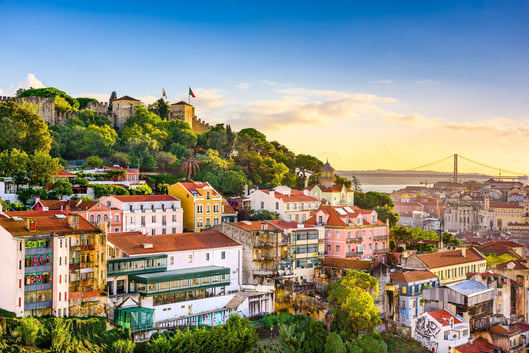
Cambi will be attending the WEX Global Bioeconomy Summit 2026, an international meeting focused on transforming organic waste streams into circular value systems at the SANA Metropolitan Lisbon Hotel, in Lisbon, Portugal.
Bringing together leaders from the water, waste, energy, agriculture and bioresources sectors, the summit will explore how cities and utilities can move beyond conventional waste management towards systems that recover energy, nutrients and other valuable resources.
Unlocking more value from sewage sludge
Sewage sludge is increasingly being recognised not simply as a waste stream to manage, but as a potential source of renewable energy, nutrients and organic matter.
Cambi’s Thermal Hydrolysis Process (THP) supports this transition by improving the performance of anaerobic digestion and enabling wastewater utilities to recover more value from their sludge.
From wastewater treatment to resource recovery
One of the central themes at WEX Global Bioeconomy Summit 2026 is the evolution of wastewater treatment plants into resource recovery facilities and urban bio-refineries.
Advanced sludge treatment can play an important role in this transition. Combining thermal hydrolysis with anaerobic digestion allows utilities to maximise renewable energy recovery while producing a smaller quantity of higher-quality biosolids.
Hear from Cambi at WEX Global 2026
Cambi experts will contribute to three sessions exploring circular cities, resource recovery, and the bioeconomy.
Circular Cities: The Urban Bioeconomy
Exploring how cities can integrate wastewater, organic waste and energy systems to unlock the urban circular bioeconomy.
📍 Meeting Room: Londres
🕒 3 November, 12:35-13:20
Moderator: Harald Kleiven, Sales Director Emerging Markets, Cambi
Panelist: Dr. PKC Bose, Chairman, Cambi
The Wastewater Bio-Refinery
Designing integrated resource recovery systems beyond the digestion vs thermal debate.
📍 Meeting Room: Londres
🕒 4 November, 12:00-12:30
Panelist
- Dr. Bill Barber, Technical Sales Manager, Cambi
Energy, Carbon and Climate
Realising the Full Value of the Circular Bioeconomy
📍 Meeting Room: Londres
🕒 4 November, 13:45-14:20
Panelist
Meet Cambi in Lisbon
We look forward to exchanging perspectives with utilities, municipalities, researchers, technology providers and other stakeholders working to advance the circular bioeconomy.
Meet the Cambi team:
Join us in Lisbon to discuss how sewage sludge can become a valuable part of the circular bioeconomy.
.svg)
.svg)
.svg)
.svg)
.svg)
.svg)
.svg)
.svg)
.svg)
.svg)
.svg)
.svg)
.svg)
.svg)
.svg)
.svg)
.svg)
.svg)
.svg)


%201.svg)

%201.svg)