
.svg)
.svg)
.svg)
.svg)
.svg)
.svg)
.svg)
.svg)
.svg)
.svg)
.svg)
.svg)
.svg)
.svg)
.svg)
.svg)
.svg)
.svg)
.svg)


%201.svg)

%201.svg)


Biosolids Land Application: Benefits, Risks, Rules and Outlook
Explore why biosolids are applied to land, how the practice works, key regulations around the world, risks, and where land application is headed.
newsletter
Biosolids land application remains one of the most established routes for recycling treated sewage sludge, returning nutrients and organic matter to soils while reducing reliance on disposal.
This article explores why biosolids are applied to land, how they are applied, the regulatory frameworks shaping practice worldwide, and the key risks that must be managed. As expectations rise regarding contaminants such as PFAS, the future of this practice is becoming increasingly selective. The land application of biosolids will remain viable where treatment quality, contaminant control, and agronomic benefit can be demonstrated.
Why Apply Biosolids to Land? Nutrients, Soil Health, and Low-Cost Management
There are several reasons why treated sludge or biosolids are applied to land. When properly managed, biosolids can act as a fertiliser, a soil amendment, and a cost-effective biosolids management route.
1 | Biosolids as Fertiliser
Biosolids contain many of the same major nutrients found in conventional fertilisers, including nitrogen, phosphorus, and potassium (also known as NPK).
However, biosolids often provide a broader nutrient profile than standard NPK fertilisers. Depending on the source, treatment process, and final product quality, biosolids may also contain important secondary nutrients and micronutrients, including sulphur, calcium, magnesium, iron, zinc, copper, manganese, boron, and molybdenum.
These nutrients support important plant and soil processes, including:
- Enzyme activity
- Chlorophyll formation
- Nitrogen metabolism
- Root development
- Crop resilience
- Soil microbial activity
Because biosolids release nutrients gradually, they can also support longer-term nutrient availability in the soil. This makes them especially useful when applied according to crop needs, soil test results, and agronomic recommendations.
2 | Biosolids as a Soil Amendment
Biosolids are more than a source of plant nutrients. They can also serve as an organic soil amendment, as they contain organic matter that plays an important role in soil health and long-term productivity.
Some mineral and chemical amendments are used mainly to correct specific soil conditions. For example, lime is commonly used to raise soil pH, gypsum may be used to address certain soil-structure or sodicity issues, and mineral fertilisers are often applied to supply targeted nutrients. These materials can be useful, but they generally do not add meaningful organic matter to the soil.
Biosolids are different because they can support both plant nutrition and soil function. The organic matter in biosolids can significantly improve soil quality, particularly in degraded, compacted, sandy, or low-carbon soils where organic matter has been depleted over time. It positively affects the following:
- Soil structure
- Water-holding capacity
- Microbial activity
- Nutrient cycling
Because they contain both organic matter and a variety of nutrients, biosolids can help rebuild the physical, chemical, and biological quality of soil. When applied at appropriate agronomic rates and under suitable site conditions, they may also support root development, improve drought resilience, and help retain nutrients.
Did you know?
Many fertilisers are designed mainly to feed crops, but biosolids can help feed both the crop and the soil. The long-term productivity of soil depends not only on adding nutrients but also on maintaining healthy soil structure, organic matter, water retention, and biological activity.
3 | Land as a Low-Cost Biosolids Management Option
Land application can also be an efficient and relatively low-cost way to manage biosolids, especially in regions where regulations support beneficial reuse and sufficient suitable land is available.
Compared with some disposal or treatment routes, land application can reduce costs by reducing the need for:
- Long-distance transport
- Landfill disposal
- Landfill fees
- Incineration or other thermal treatment
- High-energy volume-reduction processes
- Permanent storage
- Additional purchased fertiliser inputs
This can make biosolids recycling attractive for wastewater utilities, municipalities, contractors, farmers, and land managers. For utilities, it provides a beneficial use outlet for treated biosolids. For farmers and land managers, it can provide a lower-cost source of nutrients and organic matter.
However, land availability is critical. Biosolids land application works best where there is enough suitable landbank to safely absorb the material at agronomic rates. This means there must be enough approved land to match biosolids volumes with crop needs, soil conditions, nutrient limits, weather windows, and environmental protection requirements.
Income from Biosolids to Land: DC Water’s Bloom Soil Product
Some utilities have gone beyond simple biosolids management and developed marketable soil products from treated biosolids.
A well-known example is DC Water’s Bloom, a Class A biosolids-based soil amendment produced from treated wastewater solids at its Blue Plains Advanced Wastewater Treatment Plant in Washington, DC. Instead of treating biosolids only as a disposal challenge, DC Water developed Bloom as a recycled soil product that can be used for landscaping, turf, agriculture, and soil restoration.
Instead of sending valuable organic matter and nutrients to landfill or destroying them through disposal routes, wastewater utilities can recover resources for productive use.
With these benefits in mind, responsible use is still essential. Biosolids must be properly treated, tested, stored, transported, and applied to reduce risks and protect human health, soil, water, crops, livestock, and the wider environment.
Land Types for Beneficial Biosolids Application
Biosolids can be applied to a range of land types where nutrients and organic matter can be beneficially recycled back into the soil. The most common land application settings include:
- Agricultural land, where biosolids can supply nitrogen, phosphorus, organic matter, and micronutrients to support crop production.
- Landscaping and turf management, including parks, golf courses, roadside verges, and amenity land where soil fertility and structure are important.
- Soil remediation and land restoration, where biosolids can help rebuild degraded soils by improving organic matter content, water-holding capacity, and microbial activity.
- Mine-site rehabilitation, where biosolids are used to support vegetation establishment on disturbed or nutrient-poor substrates.
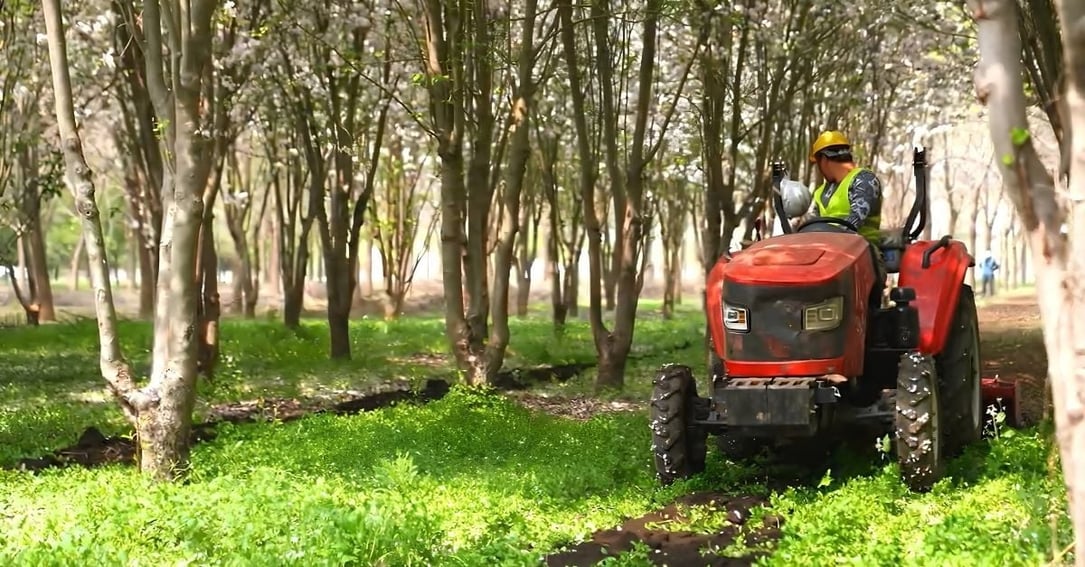
- Forestry and tree plantations, where biosolids can provide slow-release nutrients for long-term biomass growth.
- Desert or dryland rehabilitation, where organic matter addition can help improve soil moisture retention and vegetation recovery in suitable, regulated environments.
Pasture and home lawns may also receive biosolids in some jurisdictions. Applications to pasture must meet local requirements, including any restrictions on grazing, while home lawns generally require highly treated products approved for public distribution and use.
Sending to landfill is also a land-based biosolids management option, but it is not usually considered beneficial land application because nutrients and organic matter are not actively recycled into productive soils.
Common Biosolids Application Methods
The method used to apply biosolids depends on the form of the product, site conditions, crop or vegetation needs, odour controls, regulatory requirements, and the risk of runoff or nutrient loss:
Surface spreading remains one of the most common methods, particularly for dewatered biosolids or cake products. Biosolids are spread across the soil surface using agricultural spreading equipment. In many systems, the material is then incorporated into the soil to reduce odour, limit ammonia losses, minimise surface exposure, and improve contact between biosolids and the soil.
Injection or subsurface application is commonly used for liquid biosolids. The material is placed directly below the soil surface, which can reduce odour, lower runoff risk, and improve nutrient placement. This approach is often used where tighter odour control or nutrient management is required.
Spray application may also be used for liquid biosolids, particularly on suitable agricultural, reclamation, or forestry sites. Careful control of application rate, weather conditions, buffer zones, and soil moisture is important to reduce drift, runoff, and nutrient losses.
Deep-row application involves placing biosolids in trenches or rows below the soil surface, which are then covered with soil. This method is used in some reclamation, mine restoration, and forestry systems where the goal is to build a nutrient-rich rooting zone and support perennial vegetation over time. Deep-row systems can provide a longer-term nutrient source while reducing surface exposure, but they require careful site assessment, loading-rate control, and monitoring.
Understanding the Risks of Biosolids Land Application
Biosolids can recycle nutrients and organic matter back to soil, but land application must be managed as a controlled agricultural practice. The main risks depend on wastewater inputs, treatment quality, monitoring, site conditions, and application practice.
PFAS
PFAS can enter wastewater from domestic, commercial, and industrial sources. Because these compounds are highly persistent, PFAS may concentrate in sludge, raising concerns about soil, water, crops, livestock, and food-chain exposure. In many monitoring studies, low concentrations of PFAS have been found in biosolids, but results vary significantly by catchment, especially where industrial sources are present.
Heavy metals
Metals such as cadmium, lead, mercury, copper, zinc, and nickel may be present in biosolids. Some are useful micronutrients at low levels, but can become harmful if they accumulate in soil if concentrations are too high or repeated applications are poorly managed.
Pharmaceuticals and other micropollutants
Trace residues of pharmaceuticals, personal care products, hormones, flame retardants, and other organic chemicals can be found in wastewater. The behaviour of these substances varies: some degrade during treatment or in soil, while others may persist or move through soil and water.
Microplastics
Microplastics can enter wastewater from textiles, runoff, personal care products, and fragmented plastics. Treatment can capture many particles, but some may remain in sludge and persist in soil after land application.
Pathogens, odour, and excess nutrients
Treatment standards are designed to reduce pathogens, while site restrictions, setbacks, storage controls, and incorporation practices help manage exposure and odour. Modern sludge treatment technologies, such as thermal hydrolysis, can eliminate pathogens and produce high-quality biosolids with no odour.
Nutrient risks are controlled by applying biosolids based on crop needs, soil test results, slope, drainage, rainfall risk, and proximity to water bodies.
Across these risk categories, the management route is often similar: reduce contaminants at source, apply robust treatment, test and monitor biosolids and soils, follow clear pollutant and nutrient limits, keep reliable application records, and assess site-specific risks before land application.
Overall, the risk profile is highly source- and site-specific. Well-treated biosolids from controlled catchments, applied at agronomic rates under clear regulatory oversight, can deliver soil and nutrient benefits.
Biosolids Land Application: Regulations Around the World
Biosolids land application is not regulated in the same way everywhere. Some countries continue to support agricultural use under strict treatment, monitoring, and application controls, while others are moving toward tighter permitting, risk management, incineration, or mandatory phosphorus recovery.
United States
The United States has one of the most established national biosolids frameworks: the US EPA's 40 CFR Part 503 rule, formally called the Standards for the Use or Disposal of Sewage Sludge. The rule applies to sewage sludge that is land-applied, placed on a surface disposal site, or incinerated and sets requirements for pollutant limits, management practices, and operational standards.
For land application, biosolids are regulated through four main control areas:
-
- Pollutant limits, including ceiling concentrations and other pollutant-loading controls
- Pathogen reduction, which also determines whether the material qualifies as Class A or Class B
- Vector attraction reduction, which reduces the potential for insects, rodents, and other vectors to spread pathogens
- Management practices and site restrictions, including controls on where, when, and how biosolids can be applied
The US is also actively addressing emerging contaminants. In January 2025, the EPA released a draft sewage sludge risk assessment for PFOA and PFOS, two PFAS compounds, to evaluate potential human-health and environmental risks from sewage sludge that is land applied, surface disposed, or incinerated. Once finalised, the assessment may inform future regulatory action under the Clean Water Act.
Biosolids Classes in the US
In the United States, the EPA’s Part 503 rule defines different classes of biosolids based on treatment standards and permitted use:
- Class B biosolids meet pathogen reduction requirements but still require site restrictions, such as waiting periods before grazing, harvesting, or public access.
- Class A biosolids undergo a higher level of pathogen reduction and are subject to fewer site restrictions.
- Class A EQ biosolids go further by meeting Class A pathogen requirements, pollutant concentration limits, and vector attraction reduction requirements, making them subject to the fewest federal use restrictions under Part 503.
To learn more about the difference between these types, read our article on Class A biosolids.
United Kingdom
In England, Wales, and Northern Ireland, biosolids use in agriculture has historically been governed by the Sludge (Use in Agriculture) Regulations 1989 and explained through the official Sewage Sludge in Agriculture Code of Practice. The code is intended for sludge producers, farmers, landowners, and land managers who use sewage sludge on agricultural land.
Alongside regulation, the UK also relies on industry assurance and food-chain standards:
The Biosolids Assurance Scheme is an independently audited certification scheme covering sludge treatment and the recycling of biosolids to agricultural land. It helps water companies demonstrate that biosolids production, transport, storage, and land recycling are being managed against an auditable standard.
The Safe Sludge Matrix, also known as the ADAS Matrix, is a voluntary agreement developed between the UK water industry and food-chain stakeholders. It sets out which types of treated or enhanced biosolids may be applied to different crop groups and rotations, with the aim of protecting food safety and market confidence.
However, the UK framework is now in transition. The Environment Agency has stated that the current regulatory regime does not fully reflect modern risk-based regulation, current chemical complexity, or emerging hazards. Its strategy points toward bringing sludge treatment, storage, and use into a more developed Environmental Permitting Regulations framework, with the intention of eventually replacing the older Sludge Use in Agriculture Regulations.
In England, Defra (Department for Environment, Food & Rural Affairs) held a consultation on reforming the framework for sewage sludge used on agricultural land in early 2026. The decision on whether to introduce reforms will be taken by ministers following the consultation.
The UK is also beginning to address PFAS in biosolids more explicitly. The broader direction is to strengthen controls around sludge spreading, emerging contaminants, and environmental protection, while maintaining routes for beneficial use where risks can be properly managed.
Germany
Germany is one of the clearest examples of a more restrictive and resource-recovery-oriented approach.
The reformed German Sewage Sludge Ordinance aims to reduce pollutant inputs to soil while recovering valuable resources, especially phosphorus. Germany’s Federal Environment Ministry describes the ordinance as a new direction for sewage sludge utilisation, with the goal of returning valuable components such as phosphorus to the economic cycle more comprehensively.
For wastewater treatment plants above 100,000 population equivalents, soil-related sewage sludge use is only allowed until 2029. For plants above 50,000 population equivalents, it is only allowed until 2032. After those deadlines, phosphorus recovery becomes mandatory for sludge with sufficient phosphorus content, as well as for sewage sludge ash.
Germany’s model shows how biosolids policy is shifting from a simple “land application or disposal” question toward a broader resource-recovery strategy.
Switzerland
Switzerland has taken an even more restrictive route. It phased out the use of sewage sludge as fertiliser and has focused instead on thermal treatment and phosphorus recovery.
The Swiss Federal Office for the Environment (FOEN) conducted a study highlighting that Switzerland relies on 100% of its primary phosphate fertiliser being imported. The FOEN estimates that up to 6,000 tonnes of phosphorus (roughly 90% of domestic reserves) could be recovered annually from sewage sludge and its ash.
Switzerland has also set planning requirements for phosphorus recovery. Cantons, the equivalent of local states or regions, must include phosphorus recovery in their waste or sewage sludge disposal plans, with the deadline of 2028 as referenced in the Swiss phosphorus recycling framework.
Australia
Australia is notable because it reflects a wider global trend: beneficial use is still possible, but regulators are increasingly building PFAS, chemical-risk assessment, and contamination prevention into the decision-making framework.
Biosolids may be used in agriculture, forestry, mine-site rehabilitation, and landcare where state or territory controls are met. At the national level, Australia’s PFAS National Environmental Management Plan 3.1, released in May 2026, provides nationally consistent guidance for managing PFAS contamination in the environment. It was developed by the Australian, state, territory, and New Zealand governments through the Heads of EPA Australia and New Zealand.
Taken together, these regulations show that mature biosolids markets are moving in a similar direction, even when their policy choices differ.
Pathogen reduction, vector attraction reduction, and treatment quality remain the foundation of safe land application, but traditional pollutant limits are no longer enough on their own. Emerging concerns such as PFAS, microplastics, pharmaceuticals, and other contaminants are pushing regulators toward stronger source control, monitoring, traceability, and assurance.
At the same time, some countries’ biosolids policies are becoming increasingly linked to resource recovery, particularly phosphorus recycling, and in some cases to a reduced reliance on agricultural land application.
Land Application in a Changing Biosolids Landscape
Biosolids land application is unlikely to disappear, but it is likely to become more selective, more regulated, and more closely linked to proven treatment quality. Practices around the globe still vary widely depending on regulation, land availability, public acceptance, treatment capacity, and the maturity of wastewater systems.
Landfilling is likely to face increasing pressure because it loses the nutrient and organic matter value of biosolids, uses landfill capacity, and conflicts with circular economy goals. At the same time, land application will face higher expectations around micropollutants and nutrient management.
For utilities, regulators, and technology providers, the path forward is a differentiated biosolids strategy. Successful biosolids strategies produce the highest-quality material possible; control contaminants at source; match end-use routes to verified product quality; recover phosphorus and energy when land application is not suitable; and build transparent monitoring systems that farmers, food processors, regulators, and the public can trust.
Sludge-to-Energy: Plants Boosting Energy Recovery with THP
How are wastewater plants turning sludge into energy, and how thermal hydrolysis is improving efficiency and energy balance in plants worldwide.
Dive inBiosolids as Fertilizer: Advantages, Concerns, and Safe Use
Find out how biosolids use as fertilizer benefits soil and crops, what concerns it raises, and how its risks can be managed.
Dive inWhat Are Biosolids? A Complete Guide to Treated Sewage Sludge
A practical guide to biosolids, covering treatment methods, classifications, as well as reuse and disposal options.
Dive in