
.svg)
.svg)
.svg)
.svg)
.svg)
.svg)
.svg)
.svg)
.svg)
.svg)
.svg)
.svg)
.svg)
.svg)
.svg)
.svg)
.svg)
.svg)
.svg)


%201.svg)

%201.svg)


PFAS in Biosolids: Solutions and Treatment Technologies
See how wastewater and sludge treatment plants are managing PFAS in biosolids through regulation and advanced technologies.
newsletter
PFAS are receiving increasing attention in wastewater and sludge management, driven by concerns around environmental persistence and long-term exposure. While these substances can accumulate in biosolids, utilities are approaching the issue through proportionate risk management, seeking to protect the environment while maintaining the benefits of resource recovery.
As regulatory scrutiny increases, the sector is assessing how different treatment pathways, including incineration, pyrolysis and gasification, can be applied where appropriate to manage PFAS effectively.
This article examines global regulatory developments and emerging treatment technologies, highlighting how integrated strategies can support the sustainable management of PFAS in biosolids.
Understanding PFAS and Their Persistence
Per- and polyfluoroalkyl substances (PFAS) are a large and diverse group of synthetic chemicals that have been used since the 1940s in non-stick cookware, waterproof fabrics, and a wide range of industrial applications.
Their defining feature is the carbon–fluorine bond, one of the strongest in chemistry, which renders many PFAS highly persistent in the environment, hence the nickname “forever chemicals”. Once released, these compounds do not readily break down and may travel widely in air, water and soil.
Within the PFAS family, a useful distinction can be made between legacy compounds (such as PFOS and PFOA) and more recent replacement or derivative PFAS (often shorter-chain or precursor forms). While legacy PFAS have been extensively studied and are widely found in human bodies and ecosystems, replacement variants, although marketed as safer alternatives, are still persistent, mobile, and less well understood.
A growing body of scientific research links exposure to certain PFAS with adverse health outcomes. The US EPA and the CDC recognise that exposure to some PFAS may lead to developmental effects, altered immune responses, elevated cholesterol, and increased risks of certain types of cancers, although the degree of risk varies by compound, exposure level, and population group.
Did You Know?
- PFAS are pervasive in contemporary life: they have been detected in indoor dust, drinking water, food packaging, wildlife, and human blood serum globally. Their persistence, widespread use, and ability to travel long distances mean that exposure occurs far beyond manufacturing sites.
The regulatory and industrial challenges for managing these chemicals remain complex. While efforts are underway to limit legacy PFAS and monitor newer variants, the chemical industry continues to introduce new compounds at a rate that often outpaces regulatory capacity for assessment.
PFAS in Biosolids: An Environmental Challenge
Over time, PFAS from household products, industry, and landfill leachate enter sewer systems and flow into wastewater treatment plants (WWTPs). However, conventional treatment processes are not designed to remove or destroy these highly persistent chemicals.
Research consistently shows that PFAS pass through WWTPs largely unchanged. Short-chain compounds tend to remain in treated effluent, while long-chain PFAS and their precursors bind to organic matter and accumulate in sewage sludge. As a result, WWTPs function as collection points where PFAS are redistributed between liquid and solid phases rather than eliminated.
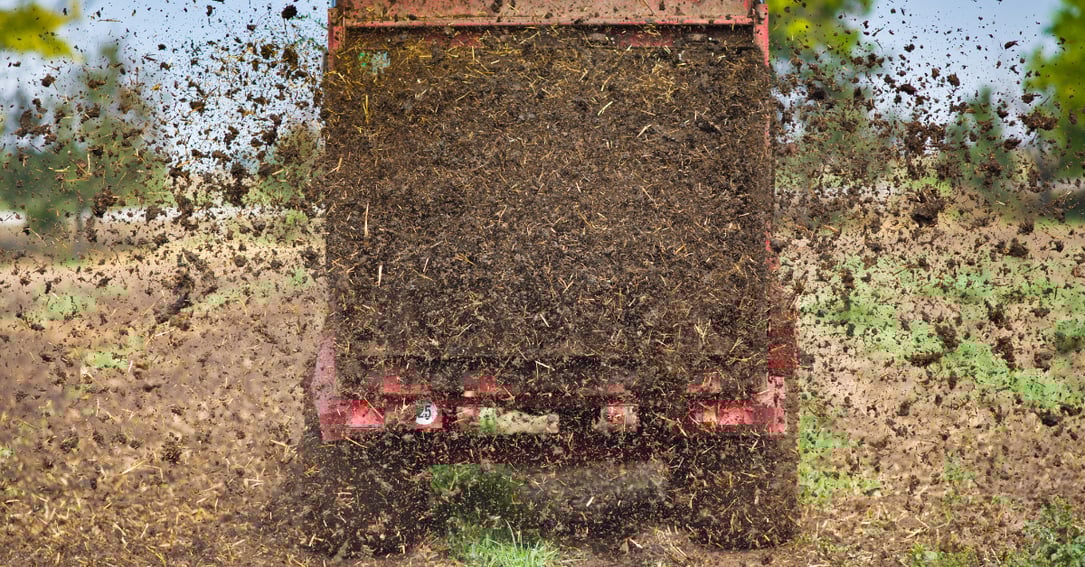
In areas where treated biosolids are applied to farmland or sent to landfills with potential leachate escape, the presence of PFAS can become problematic.
Did You Know?
- Agricultural soils today receive PFAS inputs from a variety of pathways, including pesticide use, irrigation with treated effluent, biosolids application, landfill/industrial leachate, and atmospheric deposition.
Some PFAS compounds in agricultural soils can be taken up by crops, while others may leach into groundwater, eventually reaching drinking water sources or nearby surface waters.
The risks depend on multiple factors: the PFAS concentration in the biosolids, the rate and frequency of application or disposal, soil and groundwater conditions, and the pathways through which mobilisation into crops or water can occur.
Regional Responses to PFAS Biosolids Contamination
The response to PFAS in biosolids varies considerably. In the absence of uniform federal regulations, many local and national authorities have developed their own approaches to addressing this issue. Here's how different regions are tackling the challenge:
United States: State-led Actions
Currently, there are no federal limits on PFAS in biosolids in the United States; therefore, individual states have taken the lead. In 2022, Maine became the first state to ban all land application of sludge and sludge-derived compost, following severe contamination cases linked to industrial sources and landfill leachate.
Rather than imposing outright bans, some states focus on setting limits and monitoring requirements. Michigan, for example, has introduced an interim strategy setting PFOS and PFOA thresholds for biosolids. Biosolids containing 100 µg/kg or more cannot be land-applied, while those with 20–100 µg/kg are subject to reduced application rates and mandatory source sampling.
Michigan has also tackled the problem at its source by identifying industrial dischargers (such as plating factories) and mandating better pretreatment. As a result, PFOS concentrations in some Michigan facilities dropped by over 85% between 2018 and 2022, demonstrating that effective source control can substantially reduce PFAS in biosolids. States such as Colorado and Minnesota are now expanding similar pretreatment and testing programmes.
Europe: Precaution and Advanced Treatment
Across Europe, awareness of PFAS in wastewater and sludge is rising alongside broader efforts to regulate PFAS in consumer products.
The European Union is focusing on tackling the problem at source. It has set limits for PFAS in food packaging, textiles, and cosmetics, which will start taking effect in 2026. A more comprehensive ban under review by the European Chemicals Agency could phase out most PFAS between 2026 and 2030, with limited exemptions for essential uses such as medical devices.
Several countries, including Germany, Denmark, Sweden, and the Netherlands, have already introduced PFAS limits for soil or fertilisers, indirectly affecting the land application of biosolids.
Additionally, sludge incineration is on the rise in many European regions, partly because it has demonstrated the potential to destroy PFAS and other organic contaminants. However, complete destruction requires stringent temperature conditions, and many real-world incineration facilities do not consistently maintain these optimums.
In other parts of the world, responses to PFAS in biosolids vary widely. Australia, for example, follows the PFAS National Environmental Management Plan, which emphasises risk assessment and careful management rather than hard bans. Canada is currently assessing PFAS in biosolids, with some provinces establishing guidelines for PFAS in soil and groundwater; however, no national limits have been set yet. Many Asian countries are still in the early stages of addressing PFAS, with a primary focus on drinking water standards, and limited discussion so far on biosolids reuse.
Solutions and Innovations for PFAS-contaminated Biosolids
Both immediate and long-term strategies are being developed to address PFAS in biosolids:
Source Control and Industrial Pretreatment - As demonstrated by policy developments in the EU and other regions, one of the most effective approaches is source control. Regulatory measures to phase out or restrict many PFAS compounds are expected, over time, to reduce the loads entering wastewater treatment plants and, in turn, help lower PFAS concentrations in sludge intended for land application.
Thermal Destruction - From a treatment technology perspective, high-temperature thermal processes remain among the most effective methods for destroying PFAS in biosolids. Conventional sludge incineration, as previously mentioned, is a proven approach that achieves near-complete PFAS mineralisation when operated at sufficiently high temperatures. However, it is also one of the most energy- and cost-intensive options, and it raises significant concerns about emissions, so it is often adopted only when land application of biosolids is restricted or no longer feasible.
Emerging alternatives such as pyrolysis and gasification are attracting attention as potentially more sustainable solutions. These processes operate under lower or carefully controlled oxygen conditions, converting organic matter into syngas and biochar while breaking down PFAS partially to varying degrees. While research indicates that pyrolysis and gasification can significantly reduce PFAS concentrations, complete destruction often requires secondary thermal treatment or off-gas polishing to capture residual compounds and fluorinated by-products.
These thermal PFAS destruction technologies require high-solids feedstocks, significant capital investment, and careful handling of residual streams. To ensure they deliver real environmental and economic value, thorough lifecycle and cost–benefit analyses are essential. Recent evaluations of PFAS destruction methods and the regulations surrounding biochar from sludge pyrolysis also underline the need for more coordinated technical and policy approaches.
Extended Producer’s Responsibility - In parallel with technical solutions, many experts advocate for a “polluter pays” approach, holding PFAS manufacturers financially responsible for the cost of remediation and upgraded treatment. This could mean stricter liability for companies that produce or market PFAS, as well as dedicated funding streams to help municipalities upgrade their treatment and disposal pathways.
Landfilling - Where land application is no longer feasible due to high PFAS levels, many utilities are turning to landfilling as a temporary containment measure. However, this approach poses several challenges: landfill leachate still contains PFAS; rising sludge volumes further strain landfill capacity and increase disposal costs; and valuable nutrients in sludge are lost during the process.
PFAS in Sludge and the Thermal Hydrolysis Process
The thermal hydrolysis process (THP) is widely recognised for its ability to enhance sludge biodegradability, eliminate pathogens, and produce drier, more manageable biosolids. Although THP is not specifically designed to remove PFAS, research indicates it can influence PFAS chemistry, particularly by altering precursor compounds and potentially reducing their conversion into more persistent forms.
More importantly, THP also supports downstream thermal destruction technologies such as pyrolysis, gasification, and incineration by improving overall energy efficiency. Modelling shows that THP-treated sludge, with its higher solids content and lower moisture, enables better energy balances in these energy-intensive processes for PFAS destruction.
As of 2025, more than 20 Cambi installations worldwide integrate THP with sludge incineration or drying, achieving exceptional dewaterability that makes thermal treatment of biosolids both more practical and cost-effective.
Balancing Resource Recovery and Risk
Recent studies increasingly suggest that PFAS in biosolids contribute only a relatively small share of overall exposure, especially when compared with major sources such as consumer products, pesticides, and industrial applications.
However, this does not lessen the need to address PFAS in wastewater systems. On the contrary, it reinforces the importance of robust source control measures to limit upstream inputs before they reach treatment plants, where options for removal remain limited and costly.
Beyond source control, any restrictions on land application in areas with elevated or potentially accumulating PFAS concentrations should be evaluated carefully and in context. Without a holistic approach, alternative routes for biosolids reuse or disposal risk shifting the problem rather than solving it, for example, by increasing PFAS loads in landfill leachate or transferring PFAS to air and residues if thermal processes do not achieve effective destruction and off-gas treatment.
Utilities and municipalities should assess the full operational and environmental implications of candidate PFAS treatment and destruction technologies. This includes emerging thermal options, such as pyrolysis and gasification, where evidence on the full destruction and fate of PFAS in off-gases, condensates, and char is still evolving.
Through continued innovation, improved monitoring, and coherent policy frameworks, the sector can move toward more sustainable and resilient solutions for managing biosolids in a changing regulatory and environmental landscape.
Interested in learning how THP integrates into PFAS elimination strategies such as pyrolysis and gasification? Watch this webinar by Julien Chauzy: Thermal Hydrolysis, Pyrolysis and Gasification Benefits
Sludge-to-Energy: Plants Boosting Energy Recovery with THP
How are wastewater plants turning sludge into energy, and how thermal hydrolysis is improving efficiency and energy balance in plants worldwide.
Dive inBiosolids as Fertilizer: Advantages, Concerns, and Safe Use
Find out how biosolids use as fertilizer benefits soil and crops, what concerns it raises, and how its risks can be managed.
Dive inBiosolids Land Application: Benefits, Risks, Rules and Outlook
Explore why biosolids are applied to land, how the practice works, key regulations around the world, risks, and where land application is headed.
Dive inWhat Are Biosolids? A Complete Guide to Treated Sewage Sludge
A practical guide to biosolids, covering treatment methods, classifications, as well as reuse and disposal options.
Dive in