


What is thermophilic anaerobic digestion (TAD)? Learn how it works, its advantages and limitations, and its role in wastewater and organic waste treatment.
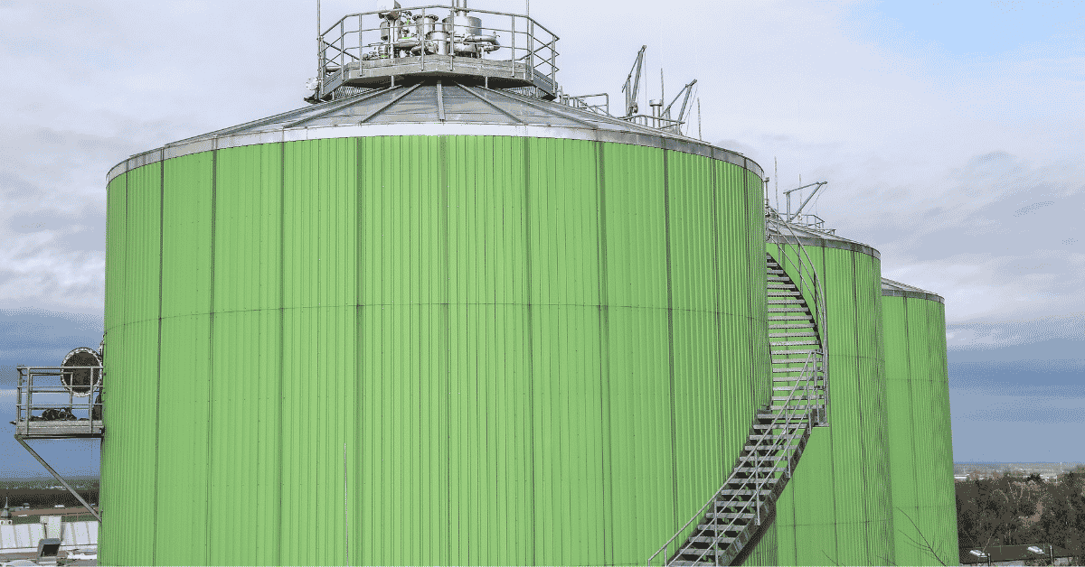
Thermophilic anaerobic digestion operates at higher temperatures to accelerate the breakdown of organic matter, potentially increasing treatment capacity and improving pathogen reduction. But does faster digestion necessarily lead to higher biogas production? And what operational trade-offs should be considered? This article explores how thermophilic digestion works, its benefits and limitations, and how it compares with conventional mesophilic digestion in wastewater and organic waste treatment.
What Is Thermophilic Anaerobic Digestion?
Thermophilic anaerobic digestion (TAD) is a biological treatment process in which microorganisms break down biodegradable organic matter in the absence of oxygen, typically at temperatures between 50°C and 60°C, with approximately 55°C being a common operating temperature.
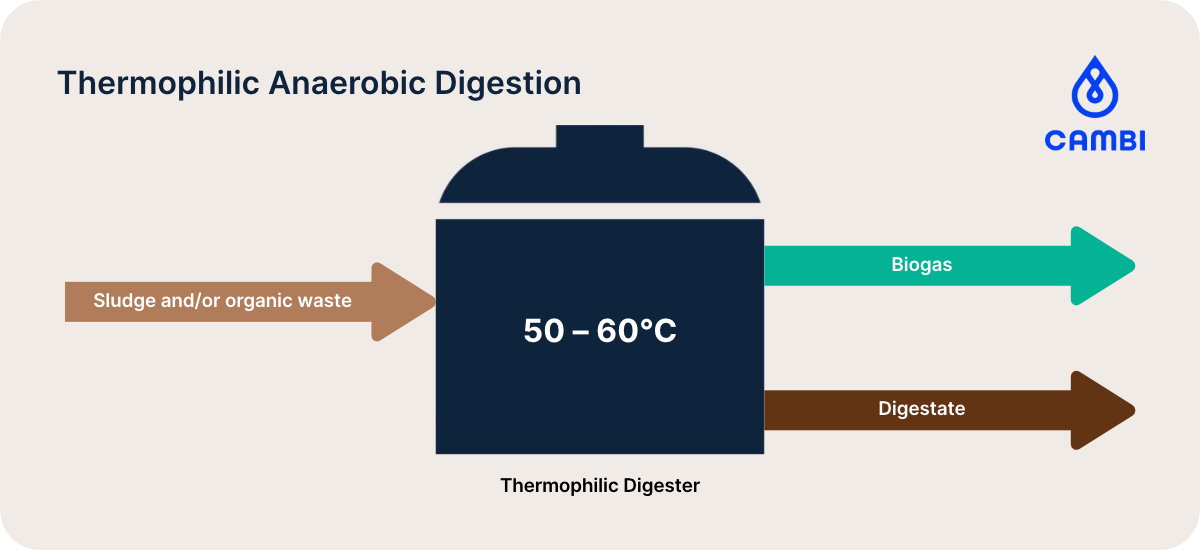
Like other anaerobic digestion processes, TAD produces two main outputs:
- Biogas: A renewable energy source composed primarily of methane and carbon dioxide. It can be used to generate electricity and heat or upgraded to biomethane.
- Digestate: The material remaining after digestion, containing water, stabilised organic matter, nutrients, and residual solids. Depending on the feedstock and regulatory requirements, digestate may undergo additional treatment before reuse or disposal.
Temperature is one of the main factors used to distinguish different approaches to anaerobic digestion. mesophilic anaerobic digestion (MAD), widely used in wastewater and organic waste treatment, typically operates at 30-40°C, thermophilic digestion uses higher temperatures to support microorganisms adapted to warmer conditions.
Both approaches rely on the same fundamental biological processes, but their operating temperatures differ, influencing treatment speed, energy requirements, process stability, and pathogen reduction.
The higher temperatures used in TAD can accelerate the breakdown of organic matter and improve pathogen reduction compared with conventional mesophilic digestion. However, these benefits come with additional heating requirements and operational considerations, making the choice between the two approaches dependent on treatment objectives and plant conditions.
How Does Thermophilic Anaerobic Digestion Work?
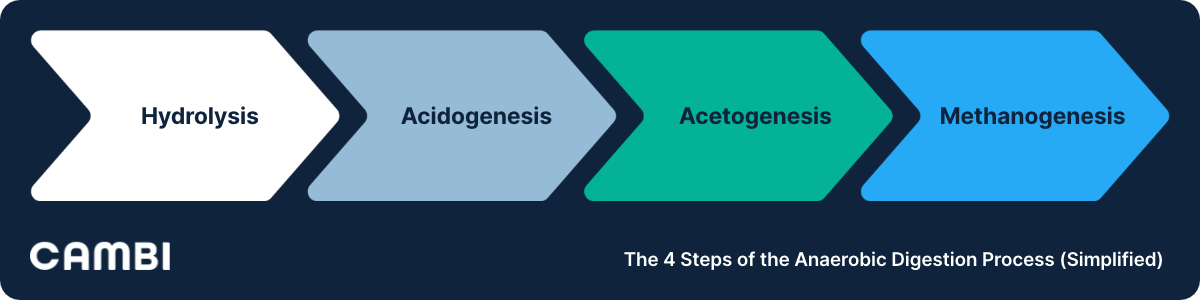
Thermophilic digestion relies on several groups of microorganisms working together to convert organic matter into biogas. As with all anaerobic digestion processes, the biological conversion occurs through four interconnected stages:
- Hydrolysis: Complex organic materials, including proteins, carbohydrates, and fats, are broken down into smaller compounds.
- Acidogenesis: These compounds are converted into intermediate products, including volatile fatty acids (VFAs), alcohols, hydrogen, and carbon dioxide.
- Acetogenesis: Intermediate compounds are converted into simpler substances, primarily acetate, hydrogen, and carbon dioxide.
- Methanogenesis: Specialised microorganisms called methanogenic archaea produce methane from acetate or from hydrogen and carbon dioxide.
For a more detailed explanation of these stages, see our guide to anaerobic digestion.
Performance Benefits of Thermophilic Anaerobic Digestion
Thermophilic digestion offers several potential advantages over conventional mesophilic digestion, particularly in terms of digestion rates, treatment capacity, and pathogen reduction. However, the extent of these benefits depends on the feedstock characteristics, process design, and operating conditions.
1 | Faster Digestion and Greater Treatment Capacity
Higher operating temperatures accelerate many of the biological reactions involved in anaerobic digestion. Under suitable conditions, thermophilic microorganisms can break down organic matter more rapidly than their mesophilic counterparts.
This faster biological activity can allow thermophilic digesters to operate at shorter retention times while achieving comparable levels of organic solids reduction.
Conventional mesophilic sewage sludge digesters typically operate at retention times of 15–30 days, while some thermophilic systems operate at 10–15 days. Actual requirements depend on the feedstock, process configuration, and treatment objectives.
Shorter retention times can provide two important benefits:
- Greater capacity in existing digesters: More sludge can potentially be processed within the same digester volume, reducing or avoiding the need for additional tanks.
- Smaller digesters in new facilities: Shorter hydraulic retention times can reduce the required tank volume, potentially lowering construction costs and space requirements.
However, faster digestion does not necessarily result in more complete breakdown of organic matter or higher overall biogas yields.
2 | Improved Pathogen Reduction
Higher operating temperatures can accelerate pathogen inactivation in sewage sludge and organic waste. This makes thermophilic digestion particularly relevant where stricter pathogen reduction requirements apply. However, the level of pathogen reduction depends on temperature, exposure time and process design.
Does Thermophilic Digestion Produce More Biogas?
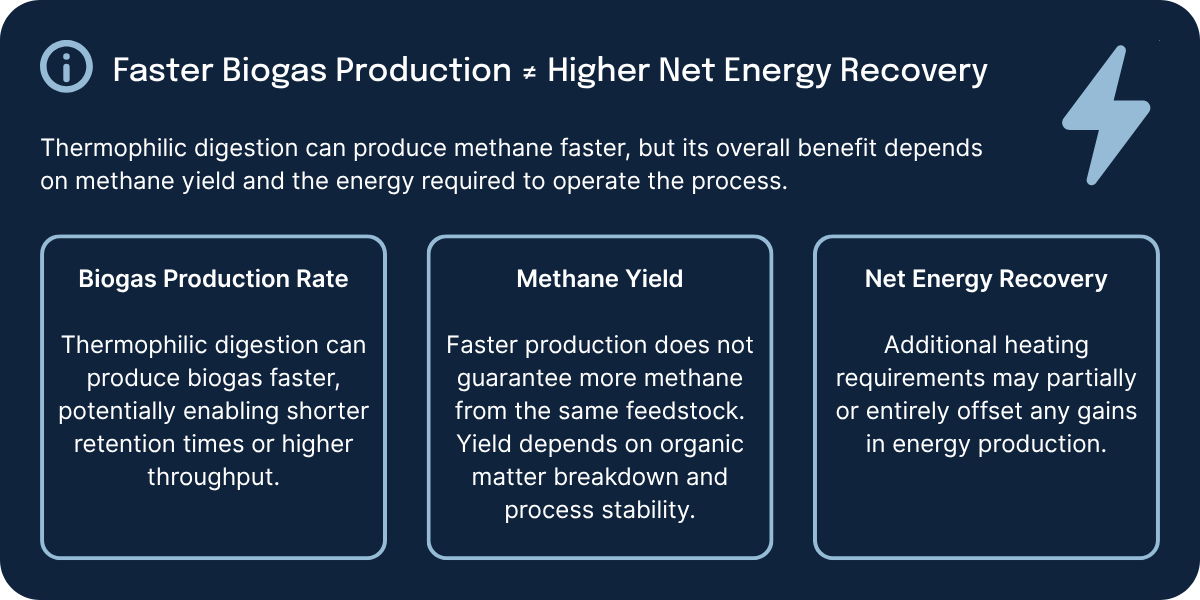
Thermophilic digestion is frequently associated with increased biogas production than mesophilic digestion. However, it is important to distinguish between the rate of biogas production and the total methane yield.
Biogas Production Rate Versus Methane Yield
These two performance indicators measure different aspects of digestion.
- Biogas production rate refers to the amount of biogas generated over a given period. It can be expressed as cubic metres of biogas produced per cubic metre of digester volume per day.
- Specific methane yield refers to the amount of methane produced per unit of organic material fed into the digester, typically expressed as cubic metres of methane per kilogram of volatile solids (VS) added.
Thermophilic digestion can achieve higher biogas production rates than mesophilic digestion because higher temperatures accelerate the degradation of organic matter. As a result, a thermophilic digester may generate the same amount of methane in less time.
However, producing methane faster does not necessarily mean producing more methane from the same amount of feedstock.
Thermophilic digestion may achieve a higher methane yield if the accelerated degradation of organic matter allows a greater proportion of the feedstock to be converted into methane within the same retention time.
If both systems break down a similar amount of organic matter, their methane yields may be comparable, even if the thermophilic system produces methane faster.
In other cases, process instability or inhibition may reduce methane recovery despite the higher operating temperature.
What About Net Energy Production with TAD?
Another important consideration is the energy required to operate the digester.
Thermophilic systems generally require more heat than mesophilic systems to maintain their elevated operating temperatures. Consequently, higher biogas production does not necessarily translate into greater net energy recovery.
The overall energy balance depends on factors such as:
- Additional methane produced or recovered
- Energy required to heat the incoming feedstock and maintain digester temperature
- Availability of recovered heat from combined heat and power (CHP) systems or other sources
- Heat losses, insulation, and the efficiency of heat exchange equipment
- Additional energy requirements for mixing, pumping and other operations
Facilities with access to low-cost or surplus heat may be better positioned to benefit from thermophilic digestion. For others, the additional heating demand may partially or entirely offset any gains in energy production.
The relevant measure is therefore not simply biogas output, but how much usable energy remains after accounting for the energy consumed by the treatment process.
Thermophilic Digestion and Pathogen Reduction: Can It Produce Class A Biosolids?
Enhanced pathogen reduction is one of the main reasons wastewater treatment facilities consider thermophilic anaerobic digestion.
Sewage sludge can contain disease-causing microorganisms, including pathogenic bacteria, viruses, and parasites.
The higher operating temperatures of thermophilic digestion can accelerate the inactivation of many of these organisms compared with conventional mesophilic digestion.
In the United States, Class A biosolids must meet stringent pathogen reduction requirements under EPA regulations. Achieving this classification can provide greater flexibility for the beneficial use of treated sewage sludge, including land application.
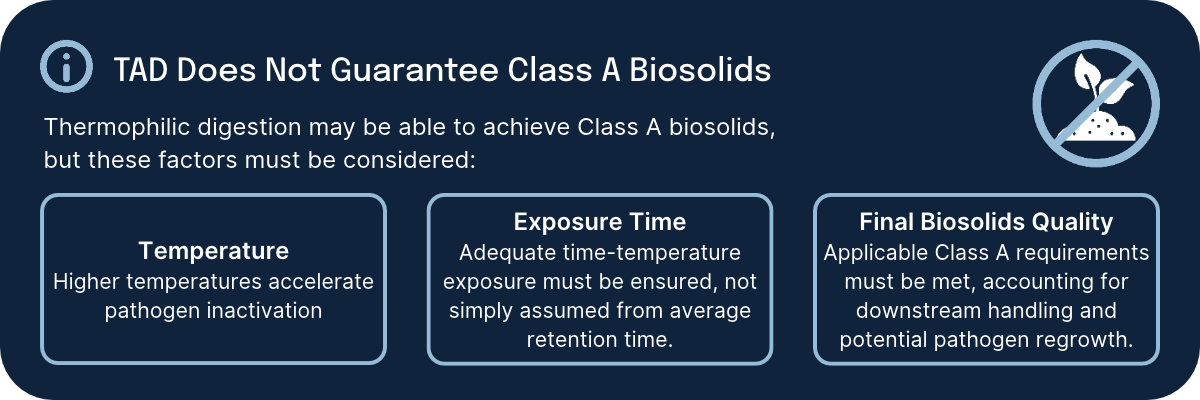
However, operating at thermophilic temperatures does not automatically guarantee compliance with Class A requirements. Effective pathogen reduction depends on several factors, particularly operating temperature, exposure time and treatment system design.
Why Temperature and Retention Time Both Matter
The extent of pathogen inactivation is influenced by the temperature reached, exposure time, and treatment system design. Generally, higher temperatures accelerate pathogen inactivation, while lower temperatures require longer exposure to achieve comparable levels of reduction.
However, the average retention time in a digester does not necessarily reflect how long every portion of sludge is treated.
In a continuously mixed digester, fresh sludge enters as treated sludge is removed. Because the contents are mixed, some sludge may leave much sooner than the average retention time, while other material remains for longer. As a result, it can be difficult to ensure that all sludge receives sufficient exposure to the required temperature for effective pathogen reduction.
Other treatment designs, such as batch or appropriately designed staged and flow-through systems, can provide better control over the minimum time that sludge is exposed to the required temperature.
This distinction is particularly important when facilities must demonstrate that their treatment process meets specific pathogen reduction requirements.
Can Thermophilic Digestion Achieve Class A Biosolids?
Thermophilic digestion can help achieve Class A biosolids by exposing pathogens to elevated temperatures. However, operating a digester at thermophilic temperatures does not automatically guarantee Class A compliance.
Under the US Environmental Protection Agency's (EPA) Part 503 regulations, compliance depends on meeting specific pathogen limits and approved treatment requirements, which may include defined time-temperature conditions.
The entire treatment process must also be considered, including the stages following digestion. One important concern is pathogen regrowth, as certain microorganisms, including E. coli and faecal coliforms, may increase in concentration during subsequent dewatering or storage.
Therefore, even when thermophilic digestion achieves substantial pathogen reduction, the final biosolids must still meet the applicable Class A requirements.
Challenges and Limitations of Thermophilic Anaerobic Digestion
Despite its potential performance benefits, thermophilic digestion is generally considered more demanding to operate than conventional mesophilic digestion.
The main challenges relate to process stability, inhibition, energy use and the characteristics of the final digestate.
1 | Greater Sensitivity to Process Disturbances
Thermophilic microbial communities can be more sensitive to changes in operating conditions, including temperature, organic loading, and feedstock composition.
Rapid temperature changes can disrupt microbial activity, particularly when microorganisms have not had sufficient time to adapt.
Similarly, sudden increases in organic loading can cause volatile fatty acid (VFA) production to exceed the capacity of methane-producing microorganisms to convert these acids into methane. Excessive VFA accumulation can disrupt process stability and potentially reduce methane production.
Thermophilic digestion therefore requires careful control of operating conditions and adequate biological adaptation when changing feedstocks or increasing loading rates.
2 | Increased Risk of Ammonia Inhibition
Ammonia inhibition is another significant consideration, particularly when digesting nitrogen-rich organic materials.
During anaerobic digestion, the breakdown of proteins and other nitrogen-containing compounds releases ammonia nitrogen, which exists in two main forms:
- Ammonium ions (NH₄⁺)
- Free ammonia (NH₃)
Free ammonia is generally more inhibitory to methane-producing microorganisms than ammonium. As temperature and pH increase, a greater proportion of the total ammonia nitrogen (TAN) can occur as free ammonia, increasing the risk of inhibition.
Consequently, thermophilic digesters may experience ammonia inhibition of TAN concentrations that would be less problematic under mesophilic conditions.
The risk can be particularly relevant when treating protein-rich food waste, animal by-products or certain sewage sludge mixtures. Managing this risk requires attention to feedstock composition, nitrogen concentrations, pH, loading rates, and microbial adaptation.
3 | Higher Heating Requirements
Maintaining a digester at approximately 55°C requires more heating than operating at a typical mesophilic temperature of around 37°C. The additional demand may increase operational costs, particularly where incoming sludge is cold, or the facility has limited access to recoverable heat.
Heating systems must also distribute heat effectively to avoid temperature gradients and maintain consistent conditions throughout the digester.
The higher energy requirement does not necessarily make thermophilic digestion uneconomical, but it makes the availability and recovery of heat important considerations when evaluating the process’s overall economic viability.
4 | Odour and Digestate Handling
Thermophilic digestion can also influence the characteristics of the resulting sludge or digestate.
Depending on feedstock and operating conditions, thermophilically digested sludge may generate stronger odours during downstream handling than mesophilically digested material.
Changes in sludge characteristics can also affect dewatering performance and the amount of polymer needed to separate water from solids.
As with pathogen regrowth, these effects should be considered across the complete treatment process rather than evaluating digester performance alone.
Maintaining Stable Thermophilic Digestion
Successful thermophilic digestion requires more than maintaining an elevated temperature. The process must support the different microbial groups involved in hydrolysis, fermentation, and methane formation while preventing conditions that could inhibit biological activity.
The following parameters are particularly important:
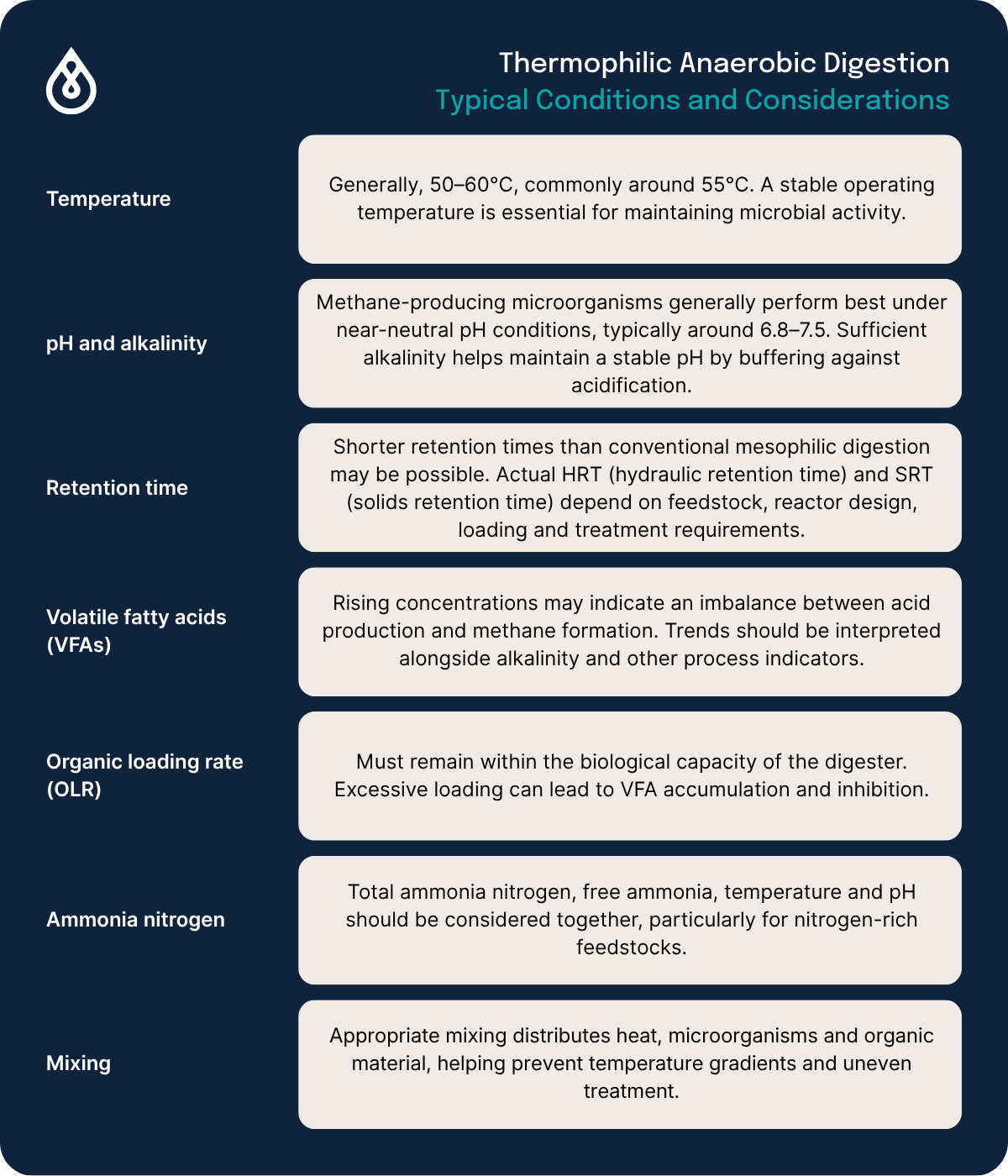
Maintaining stable thermophilic digestion requires regular monitoring and gradual adjustments to operating conditions. Tracking VFAs, alkalinity, and ammonia levels can help operators identify disturbances early, while automated controls can support more consistent operation.
Applications for Thermophilic Anaerobic Digestion
Thermophilic anaerobic digestion is used in wastewater treatment and organic waste management, particularly where higher treatment capacity, faster stabilisation or improved pathogen reduction are priorities. Its suitability depends on the feedstock characteristics, treatment objectives, and available infrastructure.
Thermophilic Digestion in Wastewater Treatment
In municipal wastewater treatment, thermophilic digestion can help facilities manage increasing sewage sludge quantities, improve pathogen reduction, and process more sludge within existing digester capacity.
Although mesophilic digestion remains more widely used, thermophilic operation can be particularly attractive for plants facing capacity constraints or seeking shorter retention times.
The benefits depend partly on the sludge composition. Primary sludge and waste activated sludge (WAS), for example, have different biodegradability characteristics, which influence how effectively they respond to thermophilic treatment.
Thermophilic Digestion of Food Waste and Organic Materials
Thermophilic digestion is also used to treat food waste, agricultural residues, animal manure, and other biodegradable organic materials.
Food waste is often highly biodegradable, making it suitable for relatively rapid digestion. Thermophilic operation can support higher organic loading rates, allowing facilities to process more material within a given digester volume.
However, feedstock composition plays an important role in process stability. Nitrogen-rich materials can increase the risk of ammonia inhibition, while the rapid breakdown of readily fermentable organic matter may lead to volatile fatty acid accumulation.
Thermophilic digestion can also be used in codigestion systems, where different organic feedstocks are combined to improve resource recovery or balance substrate characteristics.
Did You Know?
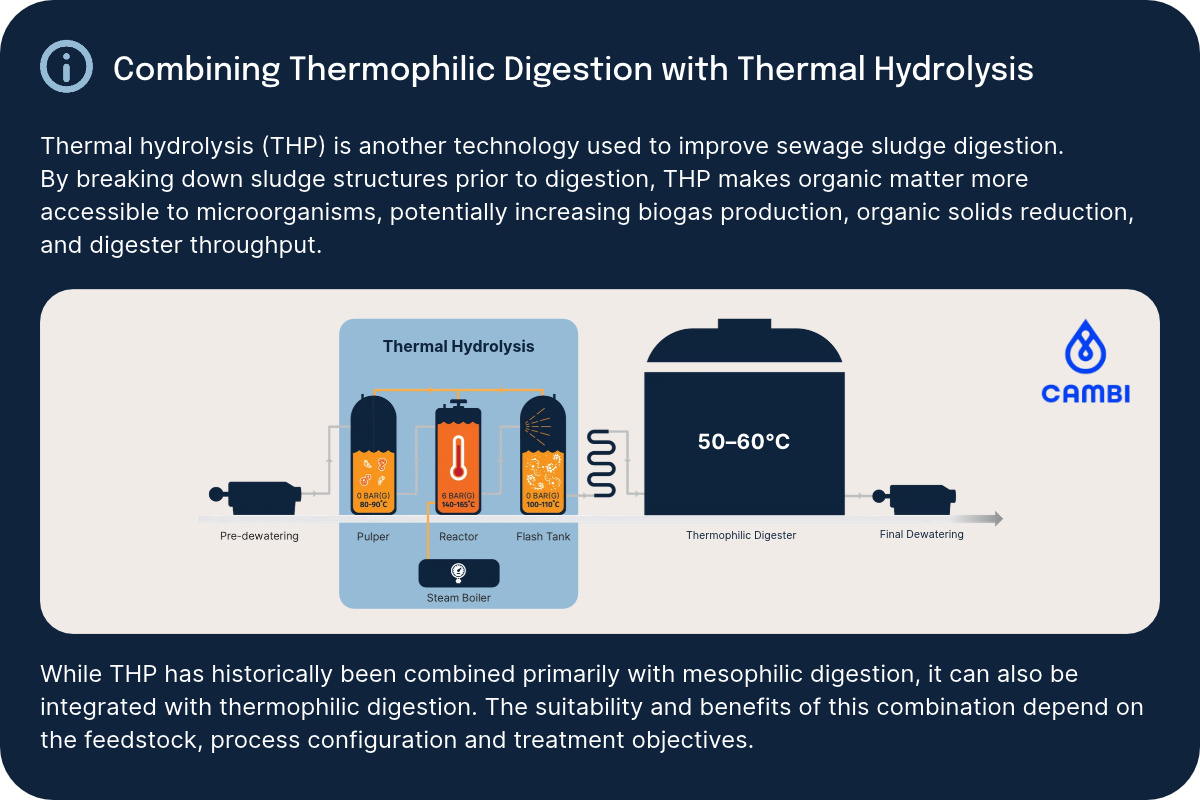
Thermophilic digestion can be configured in different ways. Like mesophilic anaerobic digestion (MAD), thermophilic digestion can be implemented in a single digester or across multiple stages, depending on treatment objectives and available infrastructure.
- Staged thermophilic digestion uses two or more thermophilic reactors to provide greater control over treatment conditions and pathogen reduction.
- Temperature-phased anaerobic digestion (TPAD) combines thermophilic and mesophilic stages, typically using the first for faster organic matter breakdown and enhanced pathogen reduction, and the second for further stabilisation. Methane production occurs in both stages.
Learn more about these approaches in our guide to advanced anaerobic digestion technologies.
When Is Thermophilic Digestion the Right Choice?
Thermophilic anaerobic digestion offers a way to accelerate organic matter breakdown, increase potential digestion capacity, and improve pathogen reduction while producing renewable energy.
However, these benefits come with higher heating requirements and more demanding process control. Faster digestion also does not automatically guarantee higher methane yields, improved net energy recovery or biosolids that meet stringent pathogen standards.
The value of thermophilic digestion ultimately depends on how well its performance characteristics align with a facility's treatment objectives, available energy, infrastructure and operational capabilities.
Understanding these trade-offs helps wastewater and organic waste treatment facilities determine whether thermophilic digestion, mesophilic digestion, or an advanced combination of technologies provides the most appropriate solution.