


Learn how mesophilic anaerobic digestion works, which feedstocks it treats, its benefits and limitations, and the role of pre-treatment.
Mesophilic anaerobic digestion is one of the most widely used methods of treating sewage sludge and biodegradable organic waste. Operating at moderate temperatures, it offers a reliable way to stabilise organic material, reduce waste quantities, and recover renewable energy in the form of biogas. This article explains the process, its typical operating conditions, advantages and limitations, and how technologies such as thermal hydrolysis can improve its performance.
What Is Mesophilic Anaerobic Digestion?
Mesophilic anaerobic digestion (MAD) is a biological process in which microorganisms break down organic matter in the absence of oxygen. The process operates at moderate temperatures, typically between 30°C and 40°C, with most systems operating between 35 and 39°C.
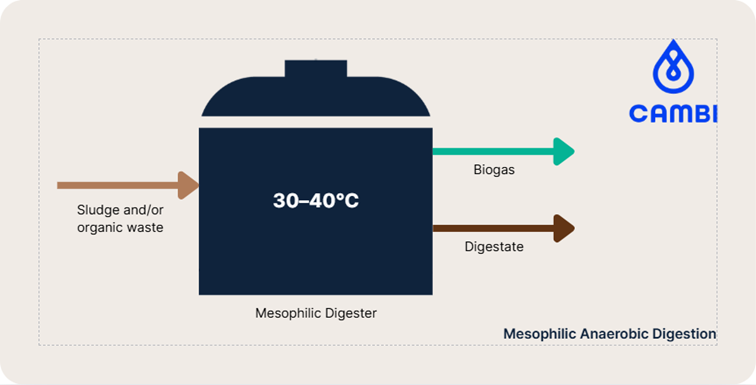
The process takes place in enclosed tanks called anaerobic digesters, where microorganisms convert biodegradable organic matter into two main products:
- Biogas: A renewable energy source consisting primarily of methane (CH₄) and carbon dioxide (CO₂). Biogas can be used to generate heat and electricity or upgraded to biomethane for use as a renewable fuel.
- Digestate: The material remaining after digestion, containing water, stabilised organic matter, nutrients, and other residual solids. Depending on the feedstock, treatment process, and local regulations, digestate may undergo further treatment before beneficial use or disposal.
Mesophilic anaerobic digestion is used to treat sewage sludge from wastewater treatment plants, as well as food waste, manure, agricultural residues, and other biodegradable organic materials.
In municipal wastewater treatment, it plays an important role in stabilising sludge, reducing its biodegradable organic content, and recovering energy that would otherwise remain unused.
How Does Mesophilic Anaerobic Digestion Work?
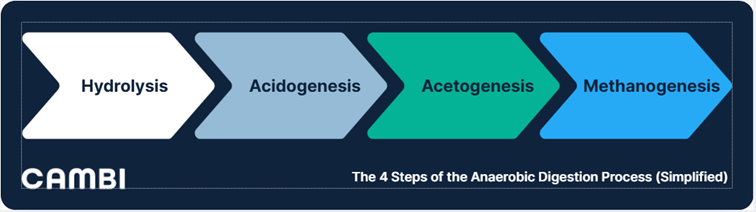
Like all anaerobic digestion processes, MAD involves four interconnected biological stages. The main difference is that microorganisms operate within the mesophilic temperature range.
These stages occur simultaneously within a conventional mesophilic digester, with different microbial communities working together to break down organic matter progressively:
- Hydrolysis: Complex organic materials, including carbohydrates, proteins and fats, are broken down into smaller, soluble compounds that microorganisms can process more easily.
- Acidogenesis: These compounds are fermented into intermediate products, including volatile fatty acids (VFAs), alcohols, hydrogen, and carbon dioxide.
- Acetogenesis: Microorganisms convert intermediate compounds into simpler substances, primarily acetate, hydrogen, and carbon dioxide.
- Methanogenesis: Specialised microorganisms called methanogenic archaea produce methane by breaking down acetate or using hydrogen and carbon dioxide.
For a more detailed explanation of the biological stages and how they interact, read our guide to anaerobic digestion.
Why Is Mesophilic Anaerobic Digestion So Widely Used?
Mesophilic anaerobic digestion is widely used in wastewater and organic waste treatment because it offers a favourable balance of process stability, energy efficiency and reliable biogas production. Much of this advantage comes from its moderate operating temperature.
Temperature is one of the main ways anaerobic digestion systems are classified. The two most common approaches are mesophilic digestion (30–40°C) and thermophilic digestion (50–60°C). Both rely on microorganisms to break down organic matter and produce biogas, but their different operating temperatures influence treatment speed, energy requirements and process stability.
MAD's established performance, relatively stable operation, and moderate heating requirements have made it a widely adopted approach for municipal wastewater and organic waste treatment.
Maintaining the Right Conditions for Mesophilic Digestion
The success of mesophilic anaerobic digestion depends on maintaining conditions that support mesophilic microorganisms. Several operating parameters influence how efficiently and reliably the process performs.
|
Parameter |
Typical Conditions and Importance |
|
Temperature |
Usually 30–40°C in conventional digesters. Maintaining a stable temperature is important, as sudden changes can disrupt microbial activity and reduce biogas production. |
|
Acidity/Alkalinity (pH) |
Generally maintained near neutral, around a pH of 6.8–7.5. Methane-producing microorganisms are particularly sensitive to acidic conditions, which can inhibit biogas production. |
|
Retention time (HRT and SRT) |
Conventional mesophilic sewage sludge digesters typically operate at retention times of 15–30 days, depending on the feedstock and system design. Hydraulic retention time (HRT) describes how long liquid remains in the digester, while sludge retention time (SRT) describes how long solids remain in the digester. |
|
Organic loading rate (OLR) |
The amount of organic material fed into the digester relative to its volume over time. Adding too much material too quickly can overwhelm microorganisms, causing acid accumulation and process instability. |
|
Mixing |
Did You Know?
Longer retention times generally allow microorganisms more time to degrade organic matter and produce biogas but also require greater digester capacity for the same daily feed volume.
For example, a conventional mesophilic sewage sludge digester with a hydraulic retention time of 20 days would receive approximately one-twentieth of its working volume in fresh sludge each day, with an equivalent volume leaving the system every day.
In this type of continuously mixed digester, HRT and SRT are approximately equal, meaning both the liquid and the solids remain in the system for an average of 20 days. However, some digester designs retain or recycle solids separately, allowing microorganisms and other solids to remain in the digester longer than the liquid.
Together, these operating conditions help maintain a balanced microbial environment, enabling organic matter to be progressively converted into biogas while producing stabilised digestate.
Applications of Mesophilic Anaerobic Digestion
Mesophilic anaerobic digestion is used across wastewater treatment, organic waste management, and agricultural biogas production. Although the underlying biological process remains the same, feedstock characteristics influence digester design, operating conditions, and treatment performance.
Mesophilic Digestion in Wastewater Treatment Plants
Municipal wastewater treatment is one of the most established applications for [AS4] mesophilic anaerobic digestion.
Wastewater treatment generates sewage sludge containing organic material removed during primary settling and biological treatment. Rather than treating this material solely as waste, wastewater utilities can use anaerobic digestion to reduce its biodegradable organic content and recover energy in the form of biogas.
Two main types of sewage sludge are commonly treated:
- Primary sludge: Organic solids separated from wastewater during primary settling. It contains a relatively high proportion of readily biodegradable material and generally offers good biogas production potential.
- Waste activated sludge (WAS): Excess biological solids removed from the activated sludge treatment process. Because much of its organic matter is contained within microbial cells and complex extracellular structures, waste activated sludge is generally more resistant to anaerobic degradation than primary sludge.
Many wastewater treatment plants digest a mixture of primary sludge and WAS, although the proportions depend on the plant's wastewater treatment configuration.
Following digestion, the remaining sludge is typically dewatered to reduce the amount of material that requires transport, further processing, or disposal. Depending on the treatment achieved and applicable regulations, the resulting biosolids may be suitable for agricultural use or other beneficial applications.
Mesophilic Digestion of Food Waste and Other Organic Materials
Beyond sewage sludge, mesophilic anaerobic digestion is widely applied to biodegradable organic waste, including food waste, agricultural residues and animal manure.
Food waste is an attractive feedstock because of its high content of biodegradable organic matter and its potential for biogas production. However, its composition can vary considerably, requiring careful management of organic loading, nutrients and process stability.
Mesophilic digestion is also commonly used in codigestion, where two or more organic feedstocks are processed together.
For example, wastewater treatment plants may introduce food waste or other suitable organic materials into existing sludge digesters to increase biogas production and make better use of available digestion capacity.
Codigestion can improve overall resource recovery, although additional feedstocks must be assessed for their compatibility with the existing process, including potential impacts on loading rates, nutrient balance, and digester stability.
Advantages and Limitations of Mesophilic Anaerobic Digestion
Mesophilic anaerobic digestion offers several operational and environmental advantages, which have contributed to its widespread adoption.
Advantages of Mesophilic Anaerobic Digestion
- Lower heating requirements: Mesophilic digestion [AS5] generally requires limited energy to maintain the desired operating temperature. This can reduce heating costs, particularly in colder climates where maintaining digester temperatures requires additional energy.
- Greater process stability: Mesophilic microorganisms are generally tolerant of operational fluctuations. This makes MAD relatively robust and easier to manage under changing feedstock characteristics or loading conditions, although careful process monitoring remains essential.
- Proven and widely adopted technology: With decades of operational experience in municipal wastewater treatment and organic waste management, mesophilic digestion is a mature technology. Its established design principles, operating practices, and maintenance requirements make it a familiar choice for utilities and plant operators.
- Renewable energy production: During digestion, microorganisms convert biodegradable organic matter into biogas, primarily consisting of methane and carbon dioxide. The biogas can be used to generate heat and electricity or upgraded to biomethane for injection into gas networks or use as vehicle fuel.
- Organic matter reduction and sludge stabilisation: MAD reduces biodegradable organic matter, helping to stabilise sewage sludge and other organic wastes. This can reduce odours, lower the amount of residual solids requiring management, and improve the suitability of the digestate for further treatment or beneficial use.
Limitations of Mesophilic Anaerobic Digestion
- Limited pathogen reduction: Although MAD reduces certain pathogens, its moderate operating temperature generally cannot meet strict pathogen reduction requirements. Additional treatment may therefore be necessary where stringent biosolids quality or pathogen reduction standards apply.
- Longer retention times: Conventional mesophilic sewage sludge digesters commonly operate with retention times of approximately 15–30 days, depending on the feedstock, operating conditions, and treatment objectives. These relatively long retention times can increase the digester volume needed to process a given amount of sludge.
- Incomplete degradation of complex organic matter: Certain organic compounds, particularly those contained within microbial cells and complex sludge structures, are difficult to break down during conventional digestion. For example, waste activated sludge contains microorganisms enclosed within cell walls and membranes, often surrounded by complex extracellular structures. These structures can make organic matter less accessible to anaerobic microorganisms, restricting biogas production and volatile solids reduction.
- Potential capacity constraints: Because conventional MAD requires relatively long retention times and is limited by the biodegradability of its feedstock, existing digesters may become capacity-constrained as sludge production increases. Expanding treatment capacity may require additional digester volume or upstream treatment technologies that improve sludge biodegradability.
Did You Know?
Conventional mesophilic anaerobic digestion (MAD) reduces pathogens in sewage sludge but typically cannot achieve the stringent pathogen reduction required for Class A biosolids under US regulations.
Common methods for producing Class A biosolids include composting, thermal drying, advanced alkaline stabilisation, pasteurisation, and thermal hydrolysis combined with anaerobic digestion. Certain thermophilic digestion configurations can also achieve Class A pathogen reduction requirements, provided the treatment process meets the applicable time-temperature, monitoring and pathogen criteria.
Mesophilic vs Thermophilic Anaerobic Digestion
While mesophilic digestion operates at moderate temperatures, an alternative approach is thermophilic anaerobic digestion (TAD), which typically operates between 50°C and 60°C.
Both approaches rely on the same fundamental biological processes to break down organic matter and produce biogas. However, their different operating temperatures influence the microorganisms involved, the rate of digestion, energy requirements, process stability and pathogen reduction.
The table below summarises the main differences between the two approaches.
|
Parameter |
Mesophilic digestion (MAD) |
Thermophilic digestion (TAD) |
|
Typical temperature |
30–40°C |
50–60°C |
|
Process stability |
Generally more tolerant of operational fluctuations |
Generally more sensitive to operational fluctuations |
|
Heating demand |
Lower |
Higher |
|
Retention time |
Typically longer due to slower digestion |
Potentially shorter due to faster digestion |
|
Pathogen reduction |
Moderate |
Higher |
|
Methane/biogas yield |
Generally reliable and consistent, depends on feedstock and operating conditions
|
Can be higher than MAD in some cases, but depends strongly on stable operation and feedstock |
These two approaches are not mutually exclusive. Multistage anaerobic digestion systems can combine thermophilic and mesophilic stages to leverage the benefits of each. Intermediate-temperature digestion also exists, though mesophilic and thermophilic remain the conventional operating regimes.
How to Optimise Mesophilic Anaerobic Digestion
Optimising mesophilic anaerobic digestion (MAD) involves improving process stability, increasing biogas production and maximising the breakdown of organic matter. Several established and emerging techniques can enhance digester performance:
- Optimising operating conditions: Maintaining stable temperatures, pH, organic loading rates, retention times, and mixing helps microorganisms work efficiently and prevents process instability.
- Feedstock codigestion: Combining sewage sludge with other organic materials, such as food waste, can increase biogas production and improve nutrient balance, provided the digester can accommodate the additional loading.
- Advanced monitoring and process control: Sensors, automated controls and predictive models help operators identify biological imbalances early and adjust operating conditions before performance deteriorates.
- Nutrient and trace element management: Ensuring microorganisms receive sufficient nutrients and essential trace elements can support methane production, particularly when processing nutrient-deficient feedstocks.
- Treatment technologies: Thermal, mechanical, chemical, and biological treatment methods can break down complex organic structures before digestion, making more material accessible to microorganisms and improving overall digestion efficiency.
When anaerobic digestion is enhanced through additional technologies, the resulting process is commonly referred to in the wastewater industry as advanced anaerobic digestion (AAD). The term also encompasses other enhanced digestion configurations.
Among the various treatment methods, thermal hydrolysis has become a well-established technology for sewage sludge treatment.
Improving Mesophilic Digestion with Thermal Hydrolysis
Thermal hydrolysis (THP) is an advanced treatment technology that uses high temperatures and pressure to break down cellular structures and make organic matter more accessible to microorganisms, improving biodegradation and biogas production.
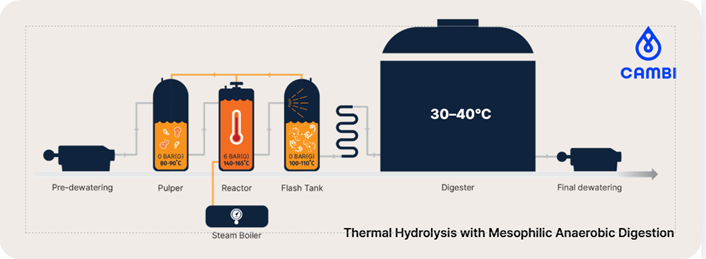
THP can be combined with mesophilic digestion in different configurations, depending on the treatment objectives. It may be applied before digestion to all or part of the sludge, between digestion stages, or after digestion.
The combination of THP with MAD provides several benefits compared with conventional mesophilic digestion:
- Higher biogas production: Improved accessibility of organic matter enables increased biodegradation, enabling more organic matter to be converted into biogas.
- Reduced biosolids quantities: Greater organic solids destruction and improved dewaterability can reduce the amount of final biosolids requiring transportation and further treatment.
- Enhanced pathogen reduction: Thermal hydrolysis provides a high-temperature treatment step that can support compliance with stringent pathogen reduction requirements, including Class A biosolids standards when the complete treatment process meets the applicable criteria.
- Greater digestion capacity: In configurations where THP is applied before a digestion stage, the more extensive breakdown of organic matter can allow digesters to operate at higher loading rates, potentially increasing throughput without additional digester volume.
These improvements can be particularly valuable for wastewater treatment plants facing increasing sludge production, limited space for new digesters, or rising sludge management costs.
The Role of Mesophilic Digestion in Modern Sludge Treatment
The widespread use of mesophilic anaerobic digestion reflects its established performance, relatively stable operating conditions and potential for energy recovery.
Although conventional MAD has limitations in treatment efficiency, capacity and pathogen reduction, technologies such as thermal hydrolysis can help address these constraints while retaining the operational advantages of mesophilic digestion.
Understanding the capabilities and limitations of mesophilic digestion can help wastewater treatment plants optimise existing systems to meet evolving demands for efficient, sustainable sludge management.