
.svg)
.svg)
.svg)
.svg)
.svg)
.svg)
.svg)
.svg)
.svg)
.svg)
.svg)
.svg)
.svg)
.svg)
.svg)
.svg)
.svg)
.svg)
.svg)


%201.svg)

%201.svg)


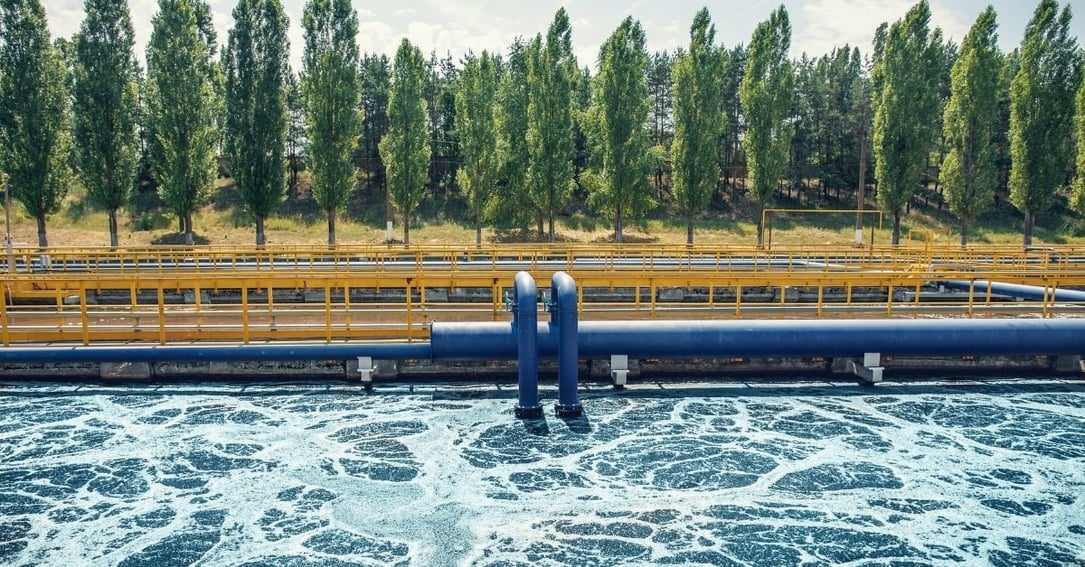
As secondary treatment expands worldwide to meet tighter effluent standards and protect receiving waters, the production of waste activated sludge is increasing accordingly. Understanding the nature of waste activated sludge and the technologies for its treatment is essential to improve plant economics, reduce environmental impact, and maximise resource recovery.
What Is Waste Activated Sludge?
Waste Activated Sludge (WAS) is the surplus sludge or biomass produced during the activated sludge process in wastewater treatment that must be deliberately removed (“wasted”) to maintain process stability. In conventional plants, this stream constitutes the secondary sludge.
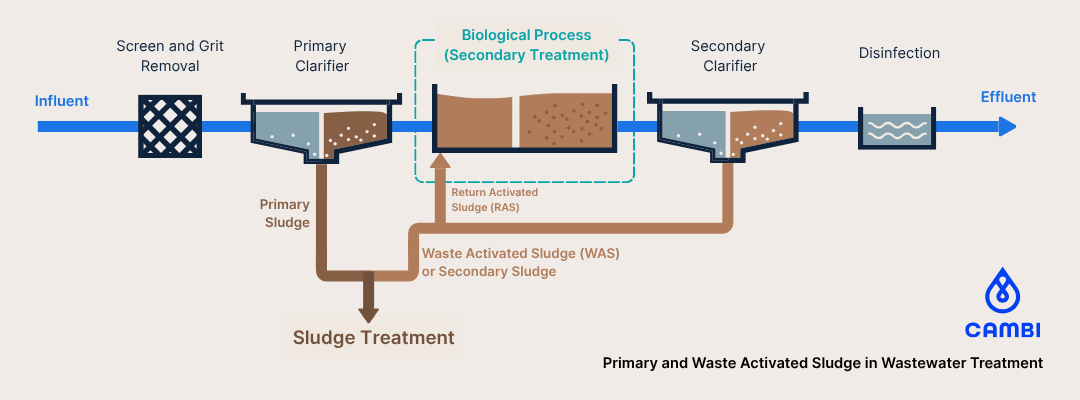
In a conventional activated sludge system, wastewater that has settled out from primary clarifiers enters an aeration tank, where it is mixed with air or oxygen and a community of microorganisms, including bacteria and protozoa. These microorganisms metabolise organic pollutants, converting them into new microbial cells, carbon dioxide, and water. As the organisms grow, they form aggregates known as biomass flocs.
This biomass-rich portion then flows to a secondary clarifier, where the flocs settle under gravity, separating from the treated effluent.
Most of this settled sludge is returned to the aeration tank as Return Activated Sludge (RAS). Recycling RAS maintains a sufficient concentration of microorganisms in the aeration tank to sustain biological treatment.
However, because microorganisms continuously reproduce as they consume organic matter, the total biomass in the system increases. If excess biomass is not removed:
- Solids retention time (SRT), or sludge age, increases
- Oxygen demand rises
- Settling characteristics may deteriorate
- Effluent quality can decline, and effluent standards may not be met
For this reason, a portion of the settled biomass is continuously withdrawn from the system. This removed fraction is called waste activated sludge.
Waste Activated Sludge, Secondary Sludge and Biological Sludge Explained
Although the term waste activated sludge originates from the conventional activated sludge process, excess biomass is generated in many biological treatment systems. These sludges behave similarly to WAS and share comparable treatment challenges. The following terms are therefore closely related and sometimes used interchangeably, although they are not strictly identical:
- Waste activated sludge (WAS): the excess biomass removed from an activated sludge process, one of the most widely used forms of biological (secondary) treatment in wastewater treatment plants.
- Secondary sludge: a broader term describing sludge produced during secondary (biological) treatment. In conventional plants with primary clarification, this is essentially the same as WAS.
- Biological sludge: the broadest term, referring to sludge generated by any biological treatment process, including both suspended-growth and attached-growth systems.
Waste activated sludge is one of the most prevalent sludge types produced worldwide. Together with primary sludge, it forms the basis of sludge treatment operations at many conventional wastewater treatment plants. However, WAS presents specific challenges:
- It is typically more difficult to dewater than primary sludge
- It can be harder to digest biologically
- It often requires dedicated sludge treatment processes before reuse or disposal
In many smaller wastewater treatment plants, particularly those without primary clarification, waste activated sludge may be the only sludge produced. Understanding its characteristics is therefore fundamental to both stable plant operation and effective downstream sludge treatment.
Primary Sludge vs Secondary Sludge
To understand waste activated sludge, it is helpful to distinguish between primary sludge and secondary sludge. Although both originate from wastewater treatment, they differ fundamentally in composition, behaviour, treatment requirements, and energy potential.
Primary sludge is generated during primary sedimentation, before biological treatment. As wastewater flows through a primary clarifier, heavier solids settle by gravity, forming primary sludge. This generally consists of:
- Settleable organic material (food particles, fibres, faecal solids)
- Inorganic grit and debris
- Relatively fresh, readily biodegradable organics
Primary sludge is usually more concentrated than secondary sludge and contains a high fraction of easily degradable material.
Secondary sludge is the excess biomass produced during secondary (biological) treatment and subsequently separated from the treated effluent. In most conventional activated sludge plants, this excess biomass is removed as waste activated sludge (WAS). Secondary sludge consists mainly of:
- Microbial biomass (bacteria, protozoa)
- Extracellular polymeric substances (EPS)
- Fine suspended solids
In suspended-growth systems such as activated sludge, microorganisms aggregate into flocs held together by EPS, sticky biopolymers composed largely of proteins and polysaccharides. This EPS-rich structure gives WAS distinctly different physical and biological properties compared with primary sludge.
Although WAS is generally more dilute than primary sludge, it is less readily biodegradable because much of its organic fraction is contained within microbial cells and EPS.
The distinction between primary sludge and secondary sludge or waste activated sludge becomes particularly important when considering downstream sludge treatment.
Thickening and Dewatering Performance
Primary sludge generally thickens and dewaters relatively easily. Its solids are larger, more particulate, and contain less biologically bound water.
Waste activated sludge, by contrast, is more challenging to dewater because:
- Water is trapped within microbial cells
- EPS binds significant amounts of water
- Flocs are compressible and shear-sensitive
As a result, mechanical dewatering of WAS often requires higher polymer doses and still yields a lower dry solids (DS) content in the final sludge cake than primary sludge. Because WAS retains a greater fraction of bound water after mechanical separation, more wet mass must be transported. Where sludge drying is employed, the additional water load also increases the energy needed for evaporation.
Anaerobic Digestion and Biogas Yield
Primary sludge typically produces more biogas per tonne of sludge than waste activated sludge. This is because primary sludge contains a higher proportion of readily biodegradable organic matter. During anaerobic digestion, these organics are more easily broken down into soluble compounds and converted into methane.
Waste activated sludge behaves differently:
- A significant portion of its organic content is contained within intact microbial cells
- These cells are surrounded by robust cell walls and embedded in extracellular polymeric substances (EPS)
- Consequently, digestion’s hydrolysis step, where complex particulate material must first be broken down into soluble compounds, becomes the limiting stage of the process.
This leads to slower digestion of WAS, lower volatile solids destruction, and reduced methane yield per tonne of sludge.
For plants that produce large volumes of waste activated sludge, improving digestibility often becomes a key operational and economic objective.
A Comparison of Primary Sludge and Secondary Sludge/Waste Activated Sludge in Wastewater Treatment
| Parameter | Primary Sludge | Waste Activated Sludge (WAS) / Secondary Sludge |
|---|---|---|
| Origin and Plant Context | Produced during primary sedimentation before biological treatment. Found in conventional municipal plants equipped with primary clarification; often in medium- to large-scale facilities. |
Produced during secondary (biological) treatment. Secondary or biological sludge is generated in all suspended-growth biological systems (activated sludge, SBR, oxidation ditch, MBR); used in plants of all sizes; smaller or compact plants without primary clarification typically produce only WAS. |
| Formation and Separation | Gravity settling of raw wastewater solids in a primary clarifier | Excess microbial biomass removed to control sludge age; separated in a secondary clarifier or membranes (MBR) |
| Components | Settleable organics (food particles, fibres, faecal solids), inorganic grit and debris | Microbial biomass (bacteria, protozoa), extracellular polymeric substances (EPS), fine suspended solids |
| Nature of Organics | Relatively fresh, readily biodegradable | Partially stabilised biological solids (microbial cells) |
| Solids Concentration (before thickening) | Higher (~2–7% dry solids) | Lower (~0.5–1.5% dry solids) |
| Floc/Particle Structure | Larger, more particulate solids | Small, compressible biological flocs held together by EPS |
| Bound Water Content | Lower proportion of biologically bound water | High bound water content due to cell structure and EPS |
| Thickening Performance | Generally thickens easily | Often difficult to thicken effectively |
| Dewatering Behaviour | Dewaters relatively easily | Difficult to dewater; requires higher polymer doses and yields lower cake solids |
| Anaerobic Digestibility | High biodegradability | Slower digestion due to rate-limiting hydrolysis |
| Methane Yield (per tonne of sludge) | Higher biogas potential | Lower methane yield per tonne |
| Strategic Importance | High energy recovery potential | Essential for maintaining effluent quality and nutrient removal performance |
How to Treat Secondary Sludge or WAS Effectively
In conventional municipal plants, the principal treatment method for WAS, whether treated alone or blended with primary sludge, is anaerobic digestion. However, because waste activated sludge is relatively dilute, biologically stabilised, and difficult to dewater, most plants rely on additional measures to maintain stable performance and avoid excessive operating costs.
The most common approaches include:
- Mixing with primary sludge
- Thickening
- Polymer use (chemical conditioning)
- Extending digestion time
Primary sludge contains a higher proportion of readily biodegradable organics and generally has better dewatering characteristics. Compared to the digestion of WAS alone, blending primary and secondary sludge conventionally enhances digester stability, allows higher effective loading rates, and improves overall dewatering performance. For this reason, mixed sludge digestion has become standard practice in conventional municipal treatment works equipped with primary clarification.
Because WAS contains a high water content, thickening is almost always required before digestion. Thickening removes unbound (free) water, reducing sludge volume and increasing solids concentration. This improves digester loading control, reduces heating demand, and minimises downstream energy requirements and equipment sizing.
Standard thickening technologies include gravity belt thickeners, dissolved air flotation (DAF) units, rotary drum thickeners, and centrifuges.
Waste activated sludge flocs carry a net negative surface charge, which keeps particles dispersed and binds water within the floc structure. Adding positively charged polymers (cationic flocculants) before dewatering neutralises particle charge, enlarges flocs, and releases some of the water bound within the sludge matrix. This improves mechanical water separation in centrifuges, belt presses, or filter presses.
In practice, optimising polymer selection and dosing is one of the most critical operational controls for improving WAS dewatering performance.
Some facilities compensate for the slower biodegradability of WAS by increasing solids retention time (SRT) in the digester. An extended digestion period allows for increased volatile solids destruction and may slightly improve methane production.
However, this approach requires larger digester volume and increased heating and mixing energy. It improves performance, but not necessarily efficiency.
Beyond these interventions, medium- and large-scale wastewater treatment plants are increasingly adopting sludge pre-treatment technologies to further enhance WAS digestibility and dewaterability.
Pre-Treatment Technologies for Waste Activated Sludge
Pre-treatment technologies for waste activated sludge are normally applied upstream of anaerobic digestion. These processes modify the physical and chemical structure of WAS to improve its biodegradability and downstream dewatering performance.
Pre-treatment methods generally fall into three categories: thermal, mechanical, and chemical. Some systems combine multiple mechanisms. Adoption varies globally and is most common in medium- to large-scale treatment plants where sludge volumes and disposal costs justify the additional capital and energy input.
Thermal Pre-treatment
Thermal processes use elevated temperatures to hydrolyse sludge and rupture cells, thereby improving digestibility.
The most established and widely adopted high-temperature pre-treatment technology is the thermal hydrolysis process (THP). THP operates at 140–170°C and 6–10 bar, with short residence times of 20–40 minutes. Sludge is heated under pressure and then rapidly depressurised. This sudden pressure release causes extensive cell lysis and solubilisation of organic matter.
Key benefits of THP:
- Increased biogas yield and improved volatile solids destruction
- Higher permissible digester loading rates, allowing reduced digester volume
- Effective pathogen destruction
- Improved dewaterability, often achieving final cake solids of 30–35% dry solids (DS) or higher
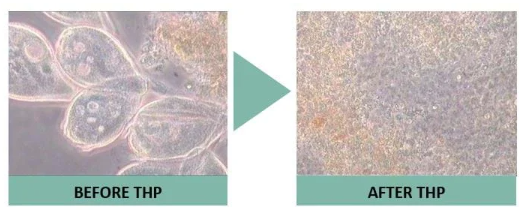
THP is used in plants that produce both primary sludge and WAS, as well as in facilities that generate only waste activated sludge. In some conventional plants, THP is applied only to the WAS stream before it is blended with primary sludge for digestion. This approach can reduce the required size and therefore the capital cost of the THP system. THP for WAS treatment is increasingly used worldwide.
Low-temperature thermal pre-treatment systems also exist. These operate at lower temperatures and provide moderate improvements in digestion performance compared with thermal hydrolysis.
Mechanical Disintegration and Chemical Pre-treatment
Mechanical technologies apply physical forces to disrupt sludge flocs and microbial cells. Example technologies include high-shear homogenisers, high-pressure disintegration, ball mills, and ultrasonic treatment. In ultrasonic systems, cavitation bubbles are generated and violently collapse, creating microshockwaves that damage cell walls and break up EPS.
These physical interventions increase soluble organics, make moderate improvements in biogas yield, and are relatively easy to retrofit into existing plants. However, energy demand can be significant, and performance gains are typically lower than with thermal hydrolysis.
Chemical methods, on the other hand, use oxidants, alkali, acids, or other reagents to solubilise organic matter and weaken cell structures. These approaches are more common in industrial applications. Techniques in this category include alkaline treatment, acid hydrolysis, chemical oxidation, and advanced oxidation processes.
Advancing WAS Treatment for Modern Utilities
Waste activated sludge is an inevitable by-product of the activated sludge process, the most widely used form of secondary treatment worldwide. While its production is essential for meeting effluent standards, WAS presents significant downstream challenges. Its microbial structure and extracellular polymeric substances (EPS) make it more difficult to digest and dewater than primary sludge, often driving a disproportionate share of treatment costs and energy demand.
Conventional strategies such as thickening, polymer conditioning, and anaerobic digestion remain fundamental to WAS treatment. Increasingly, utilities are adopting pretreatment technologies to overcome the inherent biological and rheological limitations of secondary sludge.
Thermal hydrolysis process (THP) is the most established of these solutions. By applying high temperature and pressure followed by rapid depressurisation, THP breaks down cell walls and disrupts EPS, improving digestibility, increasing biogas yield, enabling higher digester loading rates, and significantly enhancing dewaterability.
As wastewater treatment standards around the globe tighten, facilities are increasingly adopting or intensifying biological treatment processes, leading to increased WAS production . In this context, moving beyond basic sludge handling towards advanced secondary sludge treatment is increasingly central to economic resilience, energy performance, and long-term resource efficiency for utilities.
To learn more about how THP breaks down waste activated sludge, read on the technology's overall effect on sludge dewatering.